

Revenue management
Dynamic pricing for holiday rentals: how to increase revenue

Two holiday rentals next door to each other can have the same occupancy and earn very different amounts. The difference often lies in the price: how much you sell each night for, not just how many nights you sell.
Dynamic pricing for holiday rentals is designed for exactly this: adjusting the nightly rate to the season, demand and booking timing, instead of keeping the same price all year round.
In this article we look at how it works with a real case: Altavista, a lake-view apartment in Toscolano Maderno that, with the same number of bookings, earned 14.5% more in its second year.
Chapter 1
What dynamic pricing means for a holiday rental
With dynamic pricing the nightly rate is not fixed: it goes up when demand is high and comes down when you need to be more competitive. It is the same principle airlines and hotels use, applied to a holiday rental.
The goal is not to raise prices, but to sell every night for what the market is willing to pay. Sometimes that means asking more, sometimes it means lowering the rate so the calendar does not stay empty.
It is not about raising prices, but about knowing when it makes sense to do so.
Chapter 2
Why occupancy is not enough on its own
In 2025 Altavista sold 163 nights, around 44.7% of the days in the year. On its own this figure looks like the most important one, but it only tells part of the story.
On Lake Garda a night in July is not worth the same as a night in November: demand changes enormously over the year, and with it the price guests are willing to pay.
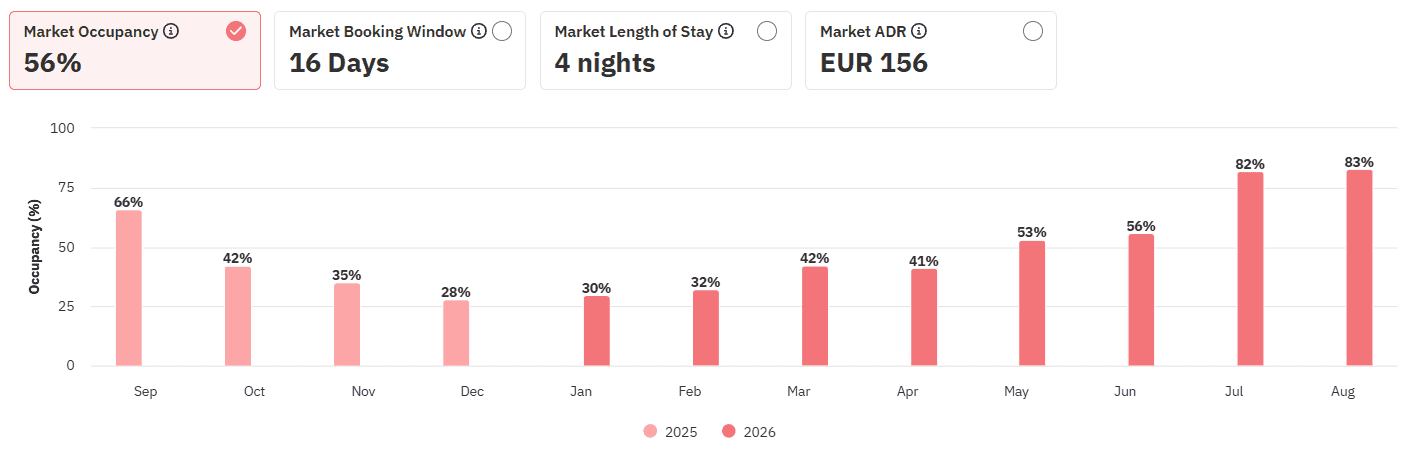
The result of a holiday rental comes from a combination of several factors:
occupancy × average rate
× seasonality × distribution
A full apartment at low prices can earn less than one that sells fewer nights, but in the right periods and at the right price. That is why occupancy and returns are not the same thing.
Chapter 3
Altavista’s price ladder
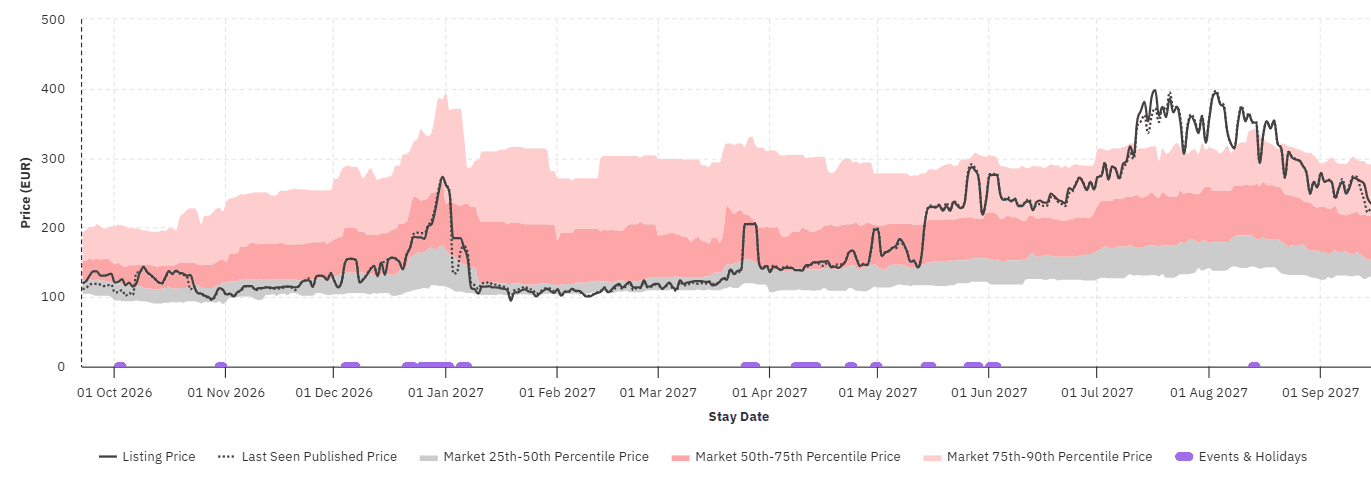
For Altavista the strategy starts at around €90 a night in the weakest periods, rises to €120–180 in the shoulder periods, goes over €200 in high season and reaches around €300 at the summer peak, between mid-July and early August.
- Low seasonweakest demandfrom about €90
- Shoulder periodsspring and autumn€120 – 180
- High seasonsummerover €200
- Summer peakmid-July – early Augustabout €300
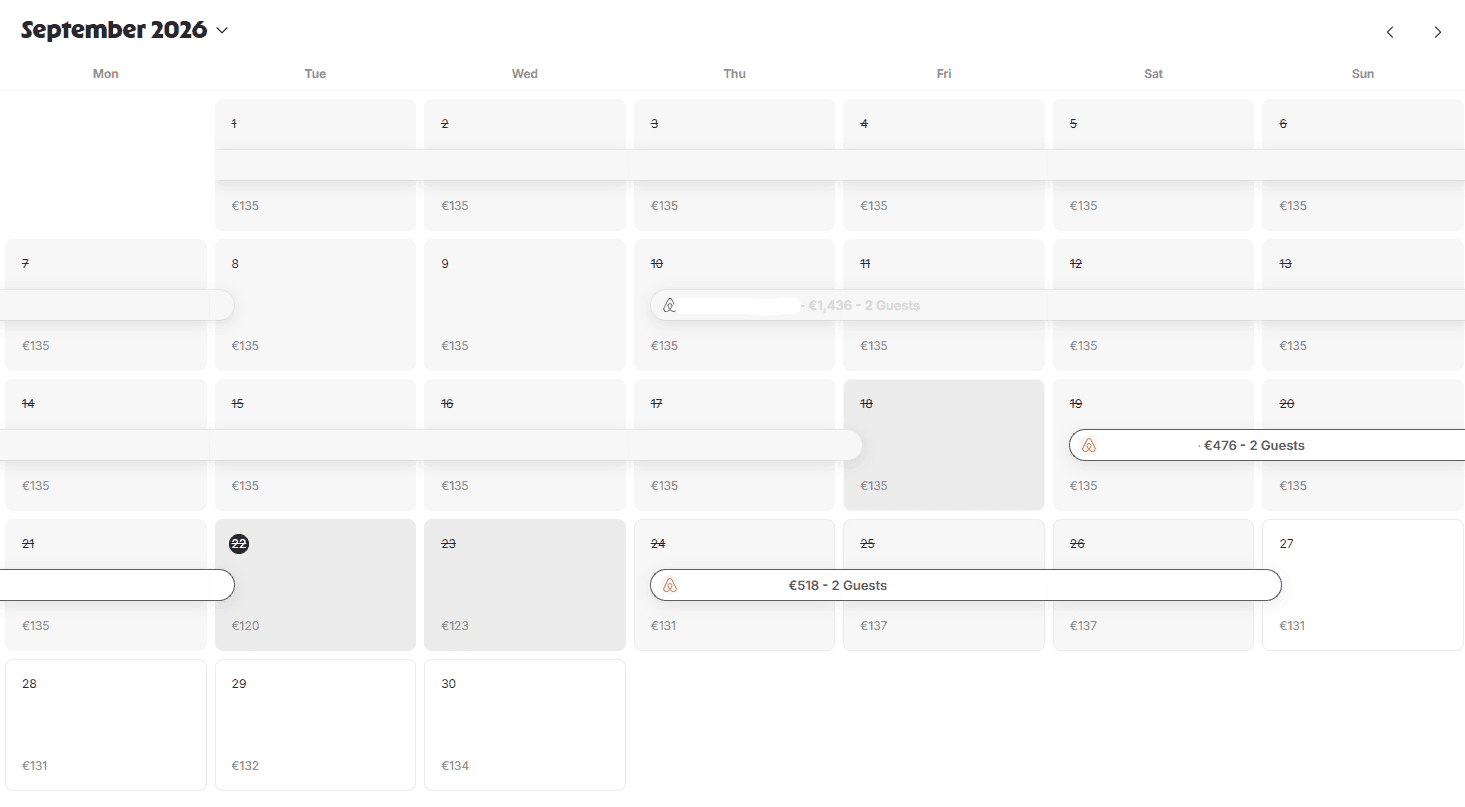
This ladder is not fixed: each rate moves within its band depending on how far away the arrival date is, how many similar homes are still available and how the calendar is filling up.
Chapter 4
The factors that move the price
The price of a night changes with several factors. These are the ones we look at every day:
- The seasonSummer, shoulder season and winter have completely different demand.
- Current demandEvents, long weekends and public holidays can push searches up within days.
- Booking lead timeGuests who book months ahead and those who book last minute behave differently.
- Length of stayLonger stays reduce cleaning costs and empty days between guests.
- Day of the weekWeekends are often in higher demand than weekdays.
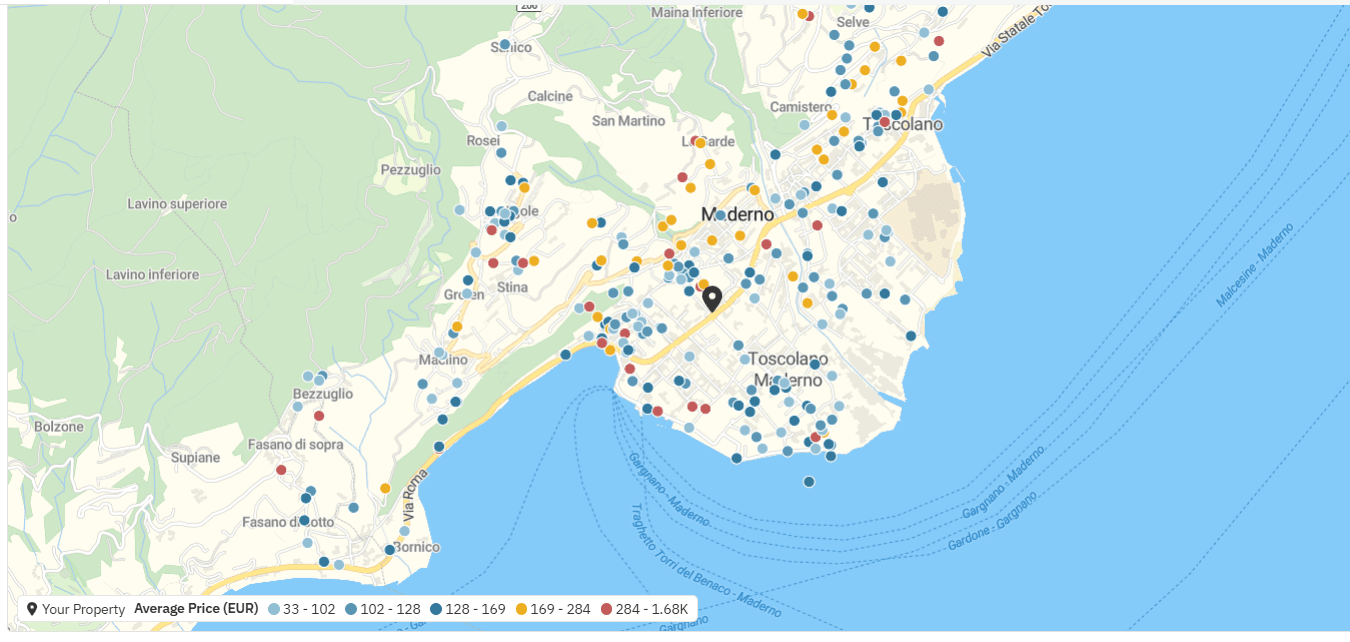
- CompetitionPrices and availability of similar homes in the same area.
- The property’s historyData from previous years shows when demand arrives and at what price.
Chapter 5
The second year: same bookings, more revenue
The first year shows you what happens. The second lets you start predicting it. In Altavista’s case, the data collected in 2025 was used to price 2026 better:
| Item | 2025 | 2026* |
|---|---|---|
| Bookings | 27 | 27 |
| Gross revenue | €24,363 | €27,903 |
| Occupancy | 44.7% | 46.3% |
| Revenue growth | — | +14.5% |
*2026 figures as of September 2026.
+14.5%more revenue with the same number of bookings
Occupancy rises by just over one point, revenue by 14.5%: the difference comes mainly from price.
Even periods considered weak can pay off if they are priced well. In 2025 Altavista sold the period from 22 December to 2 January for €1,488, which is why the 2026 projection also takes the holidays into account.
The full figures, with costs and the owner’s balance, are in the case study: how much can an apartment earn on Lake Garda.
Chapter 6
How to apply it to your holiday rental
These are the steps to get started with dynamic pricing for your holiday rental:
- Work out your minimum priceBelow a certain amount, after commissions and cleaning, a night is not worth selling. At Altavista cleaning costs €80 per stay: a one-night stay at a low price may not even cover it.
- Study similar homesLook at the prices and availability of comparable listings in your area, by type, number of beds and view.
- Use a pricing toolSoftware such as PriceLabs, Beyond or Wheelhouse analyses demand and suggests a rate for each day; it always needs to be set up and checked.
- Set minimum stays by seasonLonger stays in high season, more flexibility in the quieter periods.
- Handle orphan nightsA single free day between two bookings is easier to sell with a different price or minimum stay.
- Follow events and holidaysConcerts, trade fairs, long weekends and events around the lake change demand for whole weeks.
- Review and adjust every weekCompare how bookings are going with previous years and with competitors.
- Grow direct bookingsWith no platform commission, more is left for the owner at the same price.
Chapter 7
Mistakes to avoid
- Keeping the same price all yearYou lose value in summer and stay empty in the quieter months.
- Chasing occupancy aloneFilling the calendar by underselling your best nights reduces revenue.
- Changing prices without dataEvery change should be compared with your own history and the market.
- Forgetting per-stay costsCleaning and laundry weigh more heavily on short, low-priced stays.
- Relying only on softwareThe tool makes suggestions, but strategy is decided by someone who knows the property and the area.
For owners
How much could your holiday rental earn?
We analyse seasonality, competition and your property’s history to build a tailored pricing strategy, and show you how much value you are leaving on the table.
FAQ
Frequently asked questions
What is dynamic pricing for a holiday rental?
It means rates that change with the season, demand, booking lead time, length of stay and competition, instead of staying the same all year. The goal is to sell every night for what the market is willing to pay at that moment.
How much more can you earn with dynamic pricing?
It depends on the property and the area. In the case of Altavista, on Lake Garda, by September 2026 revenue was up 14.5% on 2025 with the same number of bookings (27).
Which tools are used for dynamic pricing?
There are pricing tools such as PriceLabs, Beyond or Wheelhouse that analyse demand and suggest rates day by day. They still need to be set up with minimum prices, minimum stays and rules suited to the property.
How often should prices be updated?
Rates suggested by pricing software update every day, but the strategy should be checked at least once a week, comparing booking pace with your own history and with competitors.
Does dynamic pricing work for a small holiday rental?
Yes. Altavista is a two-bedroom apartment for four guests: even for a small property, selling the right nights at the right price makes a significant difference to annual revenue.